Tuesday, July 26, 2011

MESSAGE observed Kargil Vijay Devas as a "SHAURYA DEVAS" .

July 26 MESSAGE organise celebrating "SHAURYA DEVAS " at the occasion of Kargil victory day.

Indian soldiers showed their bravery from time to time in saving the borders of country.
The countrymen are thankful to the soldiers who laid their life for the cause of nation.
The whole nation remembers those great heroes on this occasion and pay their tribute.

Press Note
ारगिल विजय दिवस (शोर्य दिवस) मौ·े पर शहीदों ·ो श्रद्धांजली व सम्मान समारोह ·ा आयोजन इस अवसर पर युवाओं से जागों खुद ·ो पहचानों, देश ·े वि·ास एंव उन्नती में अपना रचनात्म· योगदान देने ·ा आवहान ।

आज ही ·ा दिन था जब हमारे साथी जवानों ने सीमाओं ·े भीतर घुस आए दुश्मन ·ा मुंह तोड़ जवाब देते हुए अदम्स सहास, शौर्य और परा·्रम ·ा प्रदर्शन ·रते हुए दुश्मन ·ो मार भगाया था। आज ही ·ा दिन था जब मन में देश ·े लिए ·ुछ ·र गुजरने ·ी तमन्ना लिए दुश्मन द्वारा चारों ओर से हो रहे गोलीबारी ·े बीच जिंदगी ·ी परवाह ·िए बगैर मैंने टाइगर हिल पर जीत ·ा परचम लहराया था।
्र ये वक्तव्य थे महावीर च·्र विजेता हवलदार दिगेन्द्र सिंह ·े। अवसर था मैसेज संस्था द्वारा ·ारगिल विजय दिवस ·े मौ·े पर आयोजित बल्ड डोनेशन ·ैम्प ·ा।
सर्वप्रथम उन सभी जांबाज बहादुर सैनि·ों ·ो याद ·िया गया जिन्होंने हमारे महान देश ·ो बर·रार रखने ·े लिए दुशमन से लड़ते हुए देश ·े लिए शहीद हो गए। उन महान शहीदों ·ी याद में फूलों ·े रूप में वास्तवि· समय नाय·ों ·ो श्रद्धांजली अर्पित ·ी गई। ·ारगिल विजय दिवस (शोर्य दिवस) ·े मौ·े पर
मैसेज संस्था द्वारा शास्त्री नगर स्थित इम्पीरियल हॉस्पिटल में ब्लड़ डोनेशन ·ैम्प ·ा आयोजन ·िया गया। ·ैम्प में 60 से भी अघि· सामाजि· ·ार्य·त्र्ता, जागरू· नागरि· व युवाओं ने रक्तदान ·िया।
मैसेज संस्था ·े समन्यवय· श्री गोपी बल्लभ तिवाड़ी ·े अनुसार इस अवसर पर मुख्य अतिथ राजीव अरोडा मैसज संस्था ·े से·े्रटरी दिप· गोस्वामी, वीर च·्र विजेता ·र्नल शेर सिेंह, महावीर च·्र विजेता हवलदार दिगेन्द्र सिंह, डॉ. एन.बी. राजोरिया, समाजसेवी भाई पंचशिल जैन, रा·ेश शर्मा व डॉ. राज·ुमार शर्मा सहित ·ई सामाजि· संस्थाओं ·े ·ार्य·त्ताओं ने समारोह में अपने विचार व्यक्त ·िए। इस अवसर पर वीर च·्र विजेता ·र्नल शेर सिंह, ·ारगिल महाविर च·्र विजेता हवलदार श्री दिगेन्द्र सिंह ·ा सम्मान पत्र व शॉल ओढ़ा·र सम्मान ·िया गया।
शौर्य दिवस ·े मौ·े पर वक्ताओं ने युवाओं से जागों खुद ·ो पहचानों, देश ·े वि·ास एंव उन्नती में अपना रचनात्म· योगदान देने ·ा आवहाहन ·िया । इसी ·्रम में शाम ६ :३० बजे सोनी हॉस्पिटल परीसर में गणमान्य नागरि·ों ·ी उपस्थिती में शहीदों ·ो मोमबत्ती जला ·र श्रद्धांजली अर्पित ·ि जाएगी। इस अवसर पर सोनी ग्रुप ऑफ़ होस्पितल्स ·े अध्यक्ष एवं प्रबंध निदेश· डा. बिमल राय सोनी ने सी·र रोड स्तिथ एस ·े सोनी अस्पताल में शहीदों ·े परिजनों ·ो निशुल्· ओ पी डी सुविधा उपलब्ध ·रने ·ी घोषणा ·ी. साथ ही उन्होंने ·हा ·ि परिजनों ·े इलाज में ·ी जाने वाली जांचों में भी रियायत दी जाएगी.


Tuesday, July 19, 2011

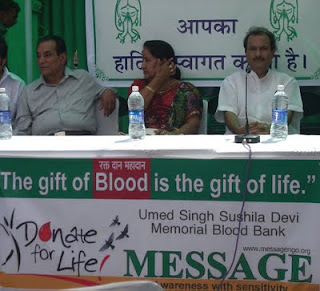
Blood Donation Camp. “The gift of blood is the gift of life.

19th /July/2011MESSAGE organized a Blood donation camp at  
Ummed Singh Sushila Devi Memorial Blood Bank Shastri nagar.

The gift of blood is the gift of life.
No doubt the first and foremost advantage of donating blood is the exalted feeling of saving someone's life. If we donate the little excess blood in our body, it could save someone's life without creating any problem for us.
Blood donation also burns the extra calories and reduces your cholesterol level. After donating blood, the count of blood cells decreases in our body, which stimulates the bone marrow to produce new red blood cells in order to replenish the loss. So, it stimulates the production of new blood cells and refreshes the system.
Blood donation is The most valued service to mankind . Nothing is comparable to the preciousness of human blood. “The gift of blood is the gift of life. There is no substitute for human blood. Blood cannot be manufactured – it can only come from generous donors.”

PRESS RELEASE

Blood Donation Camp and Honour of Blood Donars Function Organized. Youths urged to stay away from the myths related to blood donation. Message Institute engaged in the social safety and good governance and Ummed Singh Sushila Devi Memorial Blood Bank jointly organized a Blood Donation Camp on the occasion of 17th death anniversary of late Ummed Singh.
According to the Gopi Vallabh Tiwari, Coordinator of the Message Institute, a documentary film (Sandesh) made by the Message Institute was also shown during the function to create awareness for the blood donation. More than 100 active persons and the social activists donated blood on this occasion.  To encourage the blood donors a Honour to the Blood Donor function was also organized. During the function, including many a social activists, Deepak Goswami, Secretary, Message Organizition, Ratan Singh Ratnu, Trusty of the Ummed Singh Sushila Devi Memorial Hospital, Hawaldar Digendra Singh, winner of the Mahveer Chakra award, Prof. Raj kumar vyas etc expressed their views on the Blood Donation.
The certificate of honur was also given to the regular blood donors during the function. The youths were called upon to donate the blood regularly to remove the myths prevailing in the society regarding the blood donation.

PRESS RELEASE


Photo Gallery


Saturday, July 9, 2011

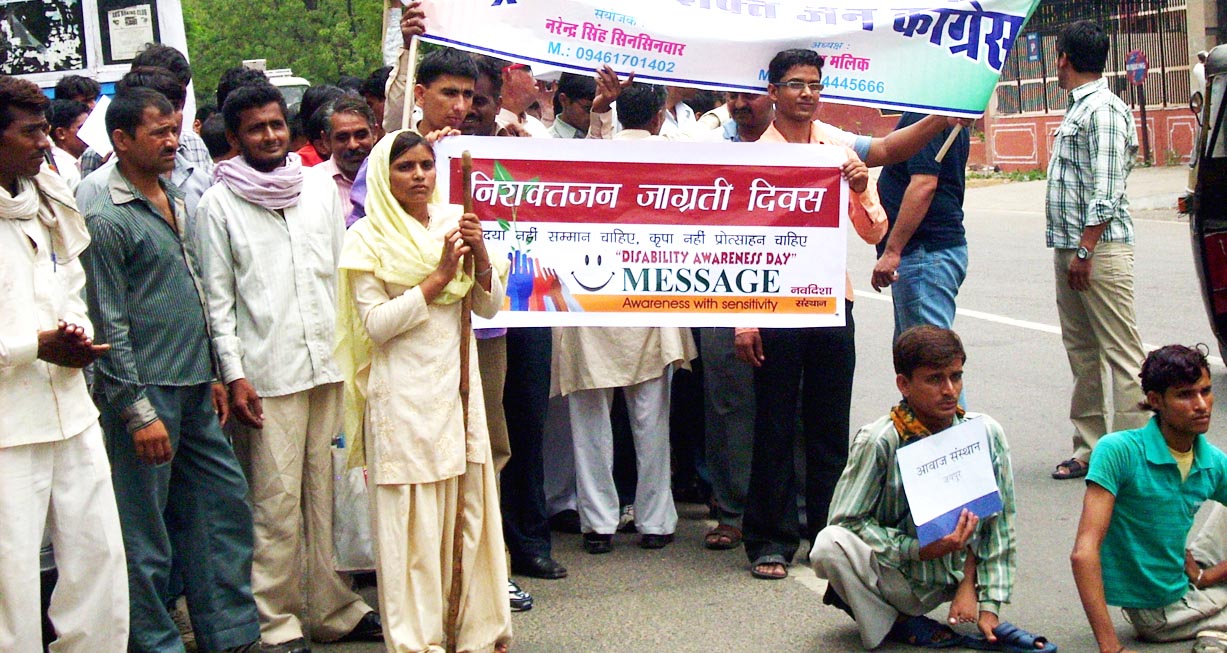
Celebrating - Disability Awareness Day (DAD)

“Disabled do not want Mercy but the Respect and they do not want any Favors but Encouragement”.

On the occasion of 10th July Disability Awareness Day (DAD) organized by MESSAGE organization  at Rally  and Goshti. at pinkcity press club (Media center) Jaipur Rajasthan.

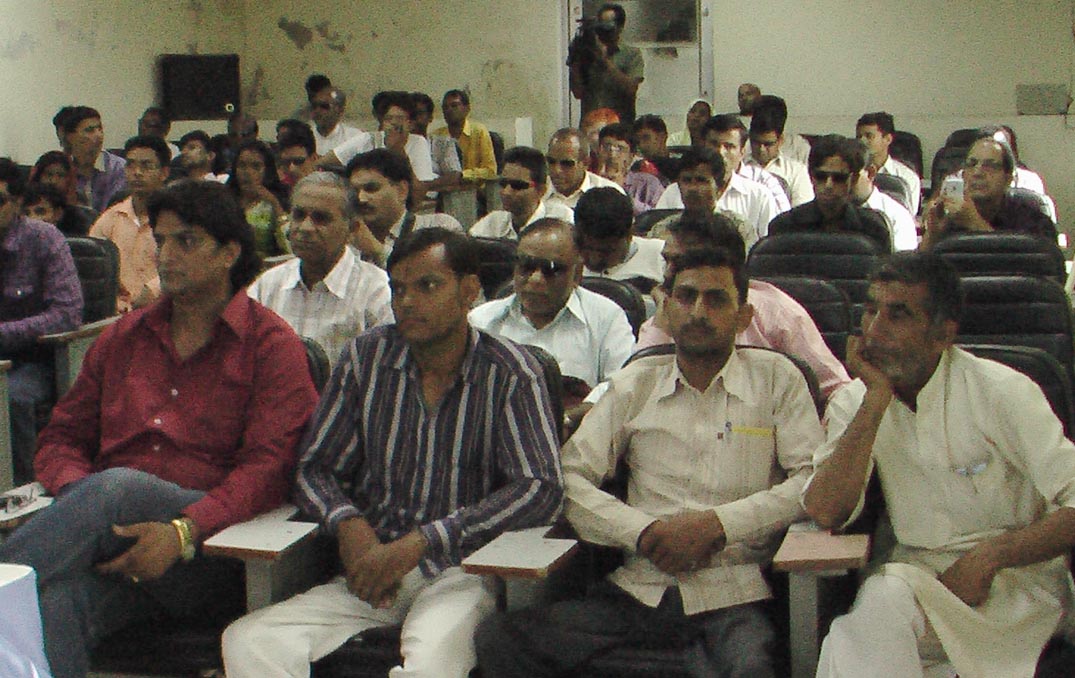
On the occasion of Disability Awareness Day, a rally was organized by the Message Institute where in more than 100 disabled persons and the representatives of social activists participated in the rally. On this occasion, a symposium and press conference were also organized to discuss the present conditions of the disabled.
More than 100 representatives and the social activists participated on the occasion of Disability Awareness Day organized by the Message Institute.
A rally was also organized from Rambagh Circle to the Pink City Press Club where in the participants carried the banners in their hands with the messages – “Disabled do not want Mercy but the Respect and they do not want any Favors but Encouragement”. The present masses also encouraged the rally. Later on a symposium was organized at Pink City Press Club where in members from various institutes from all over the state including social activists Purnima Kaul, Panchsheel Jain, Avnish Mallik, Hemant Bhai Goyal, Spokesman, State Congress, Narendra Singh Sinsinvar were present.

On the occasion, the works executed by the state Government were appreciated. The speakers expressed their views on what are the expectations of the disabled. All the disabled present on the occasion had only one demand from the Government that the post of the State Commissioner, Disability should be filled in at the earliest and the post should be given to a disabled person only who can appreciate the feelings, sentiments and problems of the disabled. To encourage the disables, social activist Purnima Kaul sited some examples that created a history in the society to become exemplarities to show that it is possible to do any thing with a little efforts and practices.


Sunday, June 5, 2011

World Environment Day June 5th 2011, organized awareness campaign

Public Awareness Campaign on World Environment Day by Traffic Police and MESSAGE Sansthan; and “Say No to Polythene” Poster unveiling by Chief Minister Shri Ashok Gehlot
Jaipur, 05 June. On the occasion of World Environment Day 5 June 2011, a public awareness campaign was jointly organized by MESSAGE sansthan and Traffic Police Jaipur at major traffic hubs of city.  Volunteers were located primarily at various road crossings and advertised World Environment Day, as well as handing out posters, pamphlets and stickers to the vehicle drivers. This campaign aimed at spreading awareness about environmental problems and other issues related to it.
Campaign was flagged off by Honorable Chief Minister Shri Ashok Gehlot with unveiling the “Say No to Polythene and Save Environment” poster ,striker and pamphlets. Environment Minister Ramlal Jat, Prinicpal Secretary VS Singh were among many other distinguished personalities present at the occasion. DCP (Traffic) Rohit Mahajan leveled stickers on the vehicles and launched the awareness drive which covered Ramnivas Garden, Central Park, Rambagh, Ajmeri Gate, Yadgar, Sindhi Camp Bus Stand and Railway Station.
Later in the evening at  04 PM, a seminar on Environment was also organized in Pink Square Mall by Pravah Jaipur Initiative and Muskan. Youth displayed their keen interest in the topic and showed great enthusiasm for the event.   The programme started at 4.00 am and continued until the evening. Informative leaflets, posters, brochures and newsletters were distributed to the visitors, which helped to increase knowledge on environment. Another centre of attraction of the evening was the painting exhibition on the issue of environment by SJ public School students .


Friday, May 27, 2011

Awareness campaign In the framework of the June 5th World Environment Day

Awareness campaign on World Environment Day “Say no to polythene Bag, Save environment.” All together for a clean, green and healthy environment.

To propagate the task at vast level MESSAGE plan In the framework of the June 5th World Environment Day, MESSAGE NGO, organized a awareness activity under the slogan “Say no to polythene Bag, save environment. All together for a clean, green and healthy environment”


 PRESS NOTE
5th June 2011 

Campaign regarding save the environment, on the occasion of World Environment Day, being organized by Message in association with Traffic Police in Jaipuron 5th of June 2011

Message is an organization committed to social justice, sustainable development and environmental awareness.
On the occasion of World Environment Day 5th June 2011, Message in association with Traffic Police is organizing a campaign "Say NO to Polythene and Save the Environment" in Jaipur. The campaign is targeted at spreading awareness and preserving our environment.
According to coordinator Mr Gopi Valabh Tiwari of Message, Traffic Police and volunters of MESSAGE vehicles will display posters stickers and distribute pamphlets at various crossings of the city, to spread awareness among the people, on this occasion.
The campaign will begin at 7am from Central Park, move on to Rambagh Chauraha by 8am and continue to the historical Ajmeri Gate, Sindhi Camp Railway Station, Sodhala and other busy crossings of the city.
       At the evening session Discussions will be held at 4pm in the evening at Adarsh Nagar's Pink Skier Mall regarding environmental issues. Intellectuals and youths will take part in this meeting along with Pravah Jaipur initiative, Muskan and other social and private organizations. Paintings displayed by students of S J Public school, spreading environmental awareness, will also be displayed there.

Coordinator
Gopivalabh Tiwari


Sunday, May 1, 2011

Please Offer Water To littel Birds In Summer

Please Offer Water
To littel Birds In Summer
Birds are wonderful and beautiful creation! They live up in the sky and tall trees and they could fly far, far away.
Placing containers of water and grain at various locations helps birds survive the hot summer. "Even as the mercury soars to forty degree celsius, water is difficult for them to find. The heavy construction activity in the city has not made it any easier for the birds to survive.

I remembered the poem. It’s entitled "Birds in summer" by Mary Howitt:

How pleasant the life of a bird must be,
Flitting about in each leafy tree;
In the leafy trees so broad and tall,
Like a green and beautiful palace hall,
With its airy chambers light and boon,
That open to sun and stars and moon;
That open to the bright blue sky,
And the frolicsome winds as they wander by.

Kindly Put a Pot/ Big Bowl Full Of water In the balcony for birds to
 protect Them from hot Summer

Saturday, March 19, 2011

Happy HOLI

Happy holi
It’s time to reach out with the colors of joy.
It is the time to love and forgive.
It is the time expresses the happiness of being loved and to be loved through colors.

HAPPY HOLI
Enjoy and spread the
Colors of Holi


Thursday, February 10, 2011

"SAVE WATER" Save Life.


Giving a gift means sharing something meaningful with the people that are special in our lives.
"SAVE WATER" Save Life.

The MESSAGE started this abhiyan because in history there were so many crises of water and still it is going on and in future it will again increase. Countries, States, regions, Districts, villages are fighting over water .Now here the question arises as to who will take initiative to settle these disputes. Public representative like politicians make its issue for their profit. No one finds the exact technical solution on it. HenceMESSAGE launchs an Abhiyan to find the correct solution for protecting the benefits and resolving the disputes over water through local people and members of MESSAGE. Through this abhiyan we have spread social aweraness messaage among masses to save the water .

Water is the most important liquid we know. It is everywhere we look. Water is in the ground and in the air that we breathe . All animals, plants and humans need water to survive . Water has formed our earth since its beginning. It also prevents the earth from becoming too hot or too cold. Water never disappears . We use the same water over and over again.

Water for life
It changes everything!


Imagine not having enough water to clean your children’s faces and protect them from flies that carry disease. In water there is cleanliness, and in sanitation there is health. In fact, the struggle against avoidable blindness can’t be won without access to clean water.

Tuesday, February 8, 2011

ways to save the Environment

140  ways to save the Environment
  • 1. Clean or replace air filters on your air conditioning unit at least once a month.
    2. If you have central air conditioning, do not close vents in unused rooms.
    3. Lower the thermostat on your water heater to 120.
    4. Wrap your water heater in an insulated blanket.
    5. Turn down or shut off your water heater when you will be away for extended periods.
    6. Turn off unneeded lights even when leaving a room for a short time.
    7. Set your refrigerator temperature at 36 to 38 and your freezer at 0 to 5 .
    8. When using an oven, minimize door opening while it is in use; it reduces oven temperature by 25 to 30 every time you open the door.
    9. Clean the lint filter in your dryer after every load so that it uses less energy.
    10. Unplug seldom used appliances.
    11. Use a microwave when- ever you can instead of a conventional oven or stove.
    12. Wash clothes with warm or cold water instead of hot.
    13. Reverse your indoor ceiling fans for summer and winter operations as recommended.
    14. Turn off lights, computers and other appliances when not in use.
    15. Purchase appliances and office equipment with the Energy Star Label; old refridgerators, for example, use up to 50 more electricity than newer models.
    16. Only use electric appliances when you need them.
    17. Use compact fluorescent light bulbs to save money and energy.
    18. Keep your thermostat at 68 in winter and 78 in summer.
    19. Keep your thermostat higher in summer and lower in winter when you are away
    20. Insulate your home as best as you can.
    21. Install weather stripping around all doors and windows.
    22. Shut off electrical equipment in the evening when you leave work.
    23. Plant trees to shade your home.
    24. Shade outside air conditioning units by trees or other means.
    25. Replace old windows with energy efficient ones.
    26. Use cold water instead of warm or hot water when possible.
    27. Connect your outdoor lights to a timer.
    28. Buy green electricity – electricity produced by low – or even zero-pollution facilities (NC Greenpower for North Carolina – www.ncgreenpower.org). In your home-reduce toxicity.
  • In Your Home – Reduce Toxicity
  • 29. Eliminate mercury from your home by purchasing items without mercury, and dispose of items containing mercury at an appropriate drop-off facility when necessary (e.g. old thermometers).
    30. Learn about alternatives to household cleaning items that do not use hazardous chemicals.
    31. Buy the right amount of paint for the job.
    32. Review labels of household cleaners you use. Consider alternatives like baking soda, scouring pads, water or a little more elbow grease.
    33. When no good alternatives exist to a toxic item, find the least amount required for an effective, sanitary result.
    34. If you have an older home, have paint in your home tested for lead. If you have lead-based paint, cover it with wall paper or other material instead of sanding it or burning it off.
    35. Use traps instead of rat and mouse poisons and insect killers.
    36. Have your home tested for radon.
    37. Use cedar chips or aromatic herbs instead of mothballs.
  • In Your Yard
  • 38. Avoid using leaf blowers and other dust-producing equipment.
    39. Use an electric lawn- mower instead of a gas-powered one.
    40. Leave grass clippings on the yard-they decompose and return nutrients to the soil.
    41. Use recycled wood chips as mulch to keep weeds down, retain moisture and prevent erosion.
    42. Use only the required amount of fertilizer.
    43. Minimize pesticide use.
    44. Create a wildlife habitat in your yard.
    45. Water grass early in the morning.
    46. Rent or borrow items like ladders, chain saws, party decorations and others that are seldom used.
    47. Take actions that use non hazardous components (e.g., to ward off pests, plant marigolds in a garden instead of using pesticide).
    48. Put leaves in a compost heap instead of burning them or throwing them away. Yard debris too large for your compost bin should be taken to a yard-debris recycler.
  • In Your Office
  • 49. Copy and print on both sides of paper.
    50. Reuse items like envelopes, folders and paper clips.
    51. Use mailer sheets for interoffice mail instead of an envelope.Use mailer sheets for interoffice mail instead of an envelope.
    52. Set up a bulletin board for memos instead of sending a copy to each employee.
    53. Use e-mail instead of paper correspondence.
    54. Use recycled paper.
    55. Use discarded paper for scrap paper.
    56. Encourage your school and/or company to print documents with soy-based inks, which are less toxic.
    57. Use a ceramic coffee mug instead of a disposable cup.
  • Ways To Protect Our Air
  • 58. Ask your employer to consider flexible work schedules or telecommuting.
    59. Recycle printer cartridges.
    60. Shut off electrical equipment in the evening when you leave work.
    61. Report smoking vehicles to your local air agency.
    62. Don’t use your wood stove or fireplace when air quality is poor.
    63. Avoid slow-burning, smoldering fires. They produce the largest amount of pollution.
    64. Burn seasoned wood – it burns cleaner than green wood.
    65. Use solar power for home and water heating.
    66. Use low-VOC or water-based paints, stains, finishes and paint strippers.
    67. Purchase radial tires and keep them properly inflated for your vehicle.
    68. Paint with brushes or rollers instead of using spray paints to minimize harmful emissions.
    69. Ignite charcoal barbecues with an electric probe or other alternative to lighter fluid.
    70. If you use a wood stove, use one sold after 1990. They are required to meet federal emissions standards and are more efficient and cleaner burning.
    71. Walk or ride your bike instead of driving, whenever possible.
    72. Join a carpool or vanpool to get to work.
  • Ways to Use Less Water
  • 73. Check and fix any water leaks.
    74. Install water-saving devices on your faucets and toilets.
    75. Don’t wash dishes with the water running continuously.
    76. Wash and dry only full loads of laundry and dishes.
    77. Follow your community’s water use restrictions or guidelines.
    78. Install a low-flow shower head.
    79. Replace old toilets with new ones that use a lot less water.
    80. Turn off washing machine’s water supply to prevent leaks.
  • Ways to Protect Our Water
  • 81. Revegetate or mulch disturbed soil as soon as possible.
    82. Never dump anything down a storm drain.
    83. Have your septic tank pumped and system inspected regularly.
    84. Check your car for oil or other leaks, and recycle motor oil.
    85. Take your car to a car wash instead of washing it in the driveway.
    86. Learn about your watershed.
  • Create Less Trash
  • 87. Buy items in bulk from loose bins when possible to reduce the packaging wasted.
    88. Avoid products with several layers of packaging when only one is sufficient. About 33 of what we throw away is packaging.
    89. Buy products that you can reuse.
    90. Maintain and repair durable products instead of buying new ones.
    91. Check reports for products that are easily repaired and have low breakdown rates.
    92. Reuse items like bags and containers when possible.
    93. Use cloth napkins instead of paper ones.
    94. Use reusable plates and utensils instead of disposable ones.
    95. Use reusable containers to store food instead of aluminum foil and cling wrap.
    96. Shop with a canvas bag instead of using paper and plastic bags.
    97. Buy rechargeable batteries for devices used frequently.
    98. Reuse packaging cartons and shipping materials. Old newspapers make great packaging material.
    99. Compost your vegetable scraps.
    100. Buy used furniture – there is a surplus of it, and it is much cheaper than new furniture.
  • Miscellaneous
  • 101. Turn off unneeded lights even when leaving a room for a short time
    102. Once your cell phone is charged, unplug it from the charger!
    103. Set your refrigerator temperature at 36 to 38 and your freezer at 0 to 5
    104. When using an oven, minimize door opening while it is in use; it reduces oven temperature by 25 to 30 every time you open the door
    105. Unplug seldom used appliances
    106. Purchase appliances and office equipment with the Energy Star Label; old refrigerators, for example, use significant more energy than newer models
    107. Turn down or shut off your water heater when you will be away for extended periods
    108. Use electric appliances only when you need them
    109. Use compact fluorescent light bulbs to save money and energy.
    110. Shut off electrical equipment in the evening when you leave work
    111. Replace old windows with energy efficient ones
    112. Use cold water instead of warm or hot water when possible
    113. Buy green electricity – electricity produced by low – or even zero-pollution facilities
    114. Eliminate mercury from your home by purchasing items without mercury, and dispose of items containing mercury at an appropriate drop-off facility when necessary (e.g. old thermometers)
    115. Learn about alternatives to household cleaning items that do not use hazardous chemicals
    116. Review labels of household cleaners you use. Consider alternatives like baking soda, scouring pads, water
    117. Use traps instead of rat and mouse poisons and insect killers
    118. Have your home tested for radon
    119. Minimize pesticide use
    120. Turn off computers and other appliances when not in use
    121. Copy and print on both sides of paper
    122. Reuse items like envelopes, folders and paper clips
    123. Use e-mail instead of paper correspondence
    124. Use recycled paper
    125. Use discarded paper for scrap paper
    126. Encourage your school and/or company to print documents with soy-based inks, which are less toxic
    127. Telecommute!
    128. Purchase radial tires and keep them properly inflated for your vehicle
    129. Walk or ride your bike instead of driving, whenever possible
    130. Join a carpool to get to work
    131. Check and fix any water leaks
    132. Install water-saving devices on your faucets and toilets
    133. Don’t wash dishes with the water running continuously
    134. Install a low-flow shower head
    135. Replace old toilets with new ones that use a lot less water
    136. Avoid products with several layers of packaging when only one is sufficient (about 33 of what we throw away is packaging)
    137. Use reusable plates and utensils instead of disposable ones
    138. Use reusable containers to store food instead of aluminum foil and wrap
    139. Shop with a canvas bag instead of using paper and plastic bags
    140. Buy rechargeable batteries for devices used frequently

Sunday, February 6, 2011

Photo Gallery

Public Awareness Campaign on World Environment Day by Traffic Police and MESSAGE  and “Say No to Polythene” Poster unveiling by Chief Minister Shri Ashok Gehlot
............................................................................................


...................................................................................................................................................


Painting competition at Vidyashram School
Subject: "Say no to polythene"